QUINTA (Y ÚLTIMA) TEMPORADA DE DAÑOS Y PERJUICIOS (DAMAGES)

Estándar

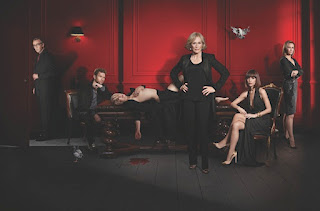
La exitosa serie de televisión “Daños y Perjuicios”, “Damages” en tierras americanas y anglosajonas llega a su fin con su quinta temporada. Parece ser que después de cuatro temporadas llenas de tensión y de casos imposibles para la abogada Patty Hewes (Glenn Close) llegaremos al final, ya definitivo de sus aventuras.
La serie fue creada por Daniel Zelman y los hermanos Glenn y Todd Kessler. A simple vista parece una típica serie de abogados, pero es un género novedoso en el que se mezcla el género judicial, el thriller y el género criminal.
La cadena FX fue la encargada de emitir las tres primeras temporadas de la serie, pero por culpa de los bajos índices de audiencia de la tercera temporada (algo menos intensa que las anteriores) decidieron poner punto y final a la aclamada serie. Poco después del final de la tercera temporada, Directv se quedó con la serie y firmó unas últimas dos temporadas para ser emitidas en la cadena estadounidense.
El eterno duelo entre Patty Hewes y Ellen Parsons (Rose Byrne) llegará a su fin después de cinco temporadas llenas de giros argumentales y crímenes complementados con flashforwards que nos mantendrán en tensión hasta el último capítulo de la serie. Y ese es el hilo argumental que puede enganchar a aquél que vea únicamente los primeros capítulos de la temporada, como la muerte del novio de Ellen (Primera escena de la Temporada 1) o el accidente de Patty y (Primera escena de la Temporada 3).
Y no solo encontramos unos personajes principales made in Hollywood, sino que la serie cuenta con personajes secundarios interpretados por grandes actores del cine americano. Destaca la presencia de Ted Danson (aparece hasta la cuarta temporada), William Hurt (Segunda temporada) y Lily Tomlin (Tercera temporada). Las estrellas invitadas de esta temporada son Ryan Phillippe, John Goodman, Dylan Baker y John Hannah.
El último y definitivo encontronazo entre Hewes y Parsons se producirá en el estelado de un nuevo caso para ambas abogadas: una página web que investiga la transparencia de las operaciones gubernamentales. Y, si hacemos algo de memoria, estoy seguro que el argumento nos recordará al caso “Wikileaks” que aún hoy está en desarrollo.
Por lo que aún queda una temporada antes de cerrar esta serie que ha impresionado a tanta gente de todo el globo. Incluso emitieron la primera temporada en TV3 (Televisión Regional Catalana) el año pasado y están luchando por conseguir los derechos de la segunda, por lo que se acabe la serie no significa que dejen de retransmitirla, justo al contrario: Damages empezará en breves para muchos.
Para finalizar, solo queda recordar que podemos disfrutar de esta quinta temporada a través de DirecTV los miércoles a las 21.00 (hora americana) y los sábados a las 21.00 (hora española) en Canal +.
——————————————————————————————–
Fifth Season of Damages
The successful TV series Damages is coming to the end of the fifth season. It seems that after four seasons full of tension and impossible cases for the lawyer Patty Hewes (Glenn Close), we will finally get to the end of her adventures. The TV Series was created by Daniel Zelman and the brothers Glenn and Todd Kessler. At first, it appears to be a typical TV Series about lawyers, but it is a new genre with a combination of judicial, thriller and criminal genres.
The FX channel broadcast the first three seasons of the series, but due to the poor ratings of the third season (so less intensive than the previous one), they decided to end the acclaimed TV Series. Shortly after the ending of the third season, DirecTV acquired the rights to the series and signed two more seasons for broadcasting on the U.S. channel.
The eternal confrontation between Patty Hewes and Ellen Parsons (Rose Byrne) will end after five seasons full of plot twists and crimes, combined with flash-forwards that will get keep us in suspense until the last episode of the series. That is the special storyline that hook anyone who sees the first episodes of the season, like the death of Ellen’s boyfriend (First scene in the First Season), or Patty’s car crash (the first scene in the third season).
Not only will we find some leading characters made in Hollywood, although some great actors from American cinema play some secondary characters. Special mention goes to Ted Danson (he appears until the fourth season), William Hurt (2nd season) and Lily Tomlin (3rd season). The guest stars this season are Ryan Phillippe, John Goodman, Dylan Baker, and John Hannah.
The last and final collision against Hewes and Parsons takes place during a new case for the lawyers: a website that investigates the transparency of government operations. I am sure the plot will remind us of the “Wikileaks” case that is still unfolding.
So there is one season remaining before the end of this series that captured the attention of viewers worldwide. They even broadcast the first season on TV3 (Televisión Regional Catalana) last year, and they are trying to get rights to the second season. Just because the series is ending does not mean it will not be shown on television, on the contrary, Damages will soon be available to many viewers.
You can watch the final season on DirecTV, Wednesdays at 9.00 p.m. (American Hour) or in Canal + on Saturdays at 9.00 p.m (Spanish Hour).
Miquiprince reflexiona sobre…subida del IVA en la cultura

Estándar

¿Final Round contra la cultura española?

No es nada desconocido que en España nos encontramos con una grave crisis económica. Ya sea por la mala gestión de unos o por el abuso de los otros nos encontramos en esta situación, aunque este post no va relacionado con las causas de esta depresión, sino con las nuevas medidas que el gobierno de Rajoy ha tomado para paliarla: La subida del IVA.

Dejando de banda que éstas medidas fueron criticadas por el Gobierno actual cuando estaban en la oposición, el aumento del impuesto (hasta el 21%) se realizará el primero de Septiembre de 2012. Muchos compradores están realizando sus últimas compras antes de la subida del impuesto sin pensar que esto les afectará de todos modos al día siguiente, aunque sin mayor vacilación vamos al tema que nos incumbe: la subida del IVA en la cultura.

Las actividades culturales sufrían, hasta este último incremento, un 8% de recargo en su precio inicial ya que se daba gran importancia a la cultura y a los bienes que aporta a la sociedad. Con este aumento del IVA la cultura perderá su categoría de “IVA reducido” a “IVA estándar”. ¿Qué significa todo eso? La respuesta es sencilla, el precio de toda actividad cultural verá aumentado un 13% su valor actual.

Tratando los datos de una forma más accesible para el lector, estamos hablando de que una entrada al cine (Estándar, sin 3D ni comodidades extra) pasará de 8€ a 9€ en los cines de Barcelona, Madrid o grandes ciudades, que la entrada de una obra de teatro pase de costar 10 o 20€ a 12 o 23€ o las entradas a los museos verán sus precios hinchados exceptuando los museos nacionales. El Gobierno supone que la gente que disfruta actualmente de la cultura (y cada vez somos menos gracias a su elevado precio) siga haciéndolo con la misma regularidad con la que recurría en estos momentos. Pero el verdadero problema, reside en que eso no sucederá así; no estamos en un “Mundo Perfecto” en el que subiendo los impuestos se incentiva el consumo.

La gran (y fatídica) consecuencia que predicen los expertos en el tema no se centra en la reducción de ingresos que sufrirá el Gobierno de las industrias audiovisuales y / o de entretenimiento cultural, la gran consecuencia será que el espectador dejará de acudir a sus sesiones de cine, a ver a su artista favorito, a pasar una tarde en un museo o a ir a ver a su grupo favorito de música. Los que trabajan en el ámbito cultural verán reducido considerablemente sus ingresos y se verán obligados a crear desempleo o incluso a cerrar algunos de sus establecimientos. El Gobierno, al ver que el porcentaje de población sin empleo aumenta, intentará volver a realizar recortes en servicios, que desembocarán con una nueva subida a los impuestos y eso provocará que los espectadores que sigan acudiendo a eventos culturales se vaya reduciendo gradualmente.

Volviendo a los números, según un grupo de empresas dedicadas al mundo del cine, música y artes escénicas el aumento del impuesto del IVA se traducirá en la pérdida de 43 millones de espectadores, la pérdida de 4.500 puestos de trabajo y el cierre de un 20% de éstas empresas. Así que quizá la subida del IVA no es la solución “definitiva” a los problemas económicos del Estado. Ah, y hago este post sin mencionar el daño que hará este incremento a pequeños establecimientos o a la educación.

La actriz Amparo Baró hizo referencia a esta subida de impuestos con la frase que les dejo a continuación:

Quieren exterminar el Teatro, quieren eliminar la cultura”

¿Pero para qué queremos la cultura? Nos hace pensar, reflexionar sobre lo que ocurre día a día, entretenernos de los líos diarios o cultivar nuestra mente con letras, acordes e imágenes. Nada de eso es productivo, mejor es invertir el dinero en propiedades o aeropuertos fantasma, invertir el tiempo en el trabajo y entretenernos con programas únicamente de cotilleos mientras degustamos tres cuartos de hora de publicidad.

————————————————————————————————-

Final Round against Spanish Culture

Spain is currently suffering a huge economic crisis.  Maybe we are in this situation due to the bad management of some, or the abuse of the others, but this post isn’t about the causes of this depression, although it’s linked with the new measures that Rajoy’s government has taken to palliate it: the IVA increase.

Apart from the fact that those measures were criticized by the actual Government when they were in opposition, the tax increased to 21% from the first of September. Many buyers did last-minute shopping before the IVA increase, without thinking it will affect them in their next acquisition, which leads us to the topic of this article: the increase of IVA in culture.

Cultural activities saw, until this last increase, an 8% surcharge in their initial price because culture had a great importance and contributed to the good of society. With this increase in IVA, culture lost the category of “reduced IVA” and went to “standard IVA”.  What does this all mean? The answer is easy, the price of all cultural activities will increase by 13%.

To simplify the facts, we are talking about the fact that a movie ticket (standard, without 3D or another facilities) will increase from 8€ to 9€ in  Barcelona, Madrid or similar cinemas; a theatre ticket will increase from 10 or 20€ to 12 or 23€; and museum tickets will see their prices  increased (except national museums).  The Government assumes that people who currently enjoy culture (and every time the numbers decrease due to high prices) will continue doing it with the same regularity as they do now.  In the real world,  this will not happen because we aren’t in a “Perfect World” where increasing taxes increases consumerism.

The damaging consequence the experts predict are not talking about the reduction of funds the  Government will receive from the audiovisual industries, and/or cultural entertainment, the greatest consequence is that the spectator will stop going to their film sessions, to see to their favorite artist, spending an afternoon in a museum or going see their favorite music band.
Employees in the cultural sector will see their earnings drop and will have to lay off staff, or  close some of their establishments. The Government, seeing that the percentage of the unemployed population increases, will attempt to make cuts in services, which will lead to further rise in taxes and an even greater reduction in the number of spectators.
According to a group of companies dedicated the world of cinema, music and scenic arts, the IVA increase will result in the loss of 43 million spectators, the loss of 4.500 jobs and the closure of  20% of these companies.  So maybe increasing IVA isn’t the definitive solution to the economic problems of the State.  Not to mention the damage that this increase will do to the little companies or education.
The actress Amparo Baró referred to this tax increase with the sentence below:
“They want to exterminate the Theatre; they want to destroy culture”
But why do we want culture?  It makes us think, reflect on what happens each day, entertains us and cultivates our minds with words, chords and images. Nothing of that is productive.  Is it better to invest the money in properties or phantom airports?  Or should we invest our time in work and entertain ourselves with gossip programs that include 45 minutes of publicity?
POST ORIGINAL DISPONIBLE EN:

Índice entradas: Colaboraciones y artículos cedidos

Estándar

Artículos cedidos a CarlosPuech.com.es (Orden de aparición)

El fin de una leyenda: Lance Amstrong podría perder todos sus títulos

Los Caminantes (Carlos Sisí)

Final Round a la cultura española

Quinta y última temporada de Damages (Daños y Perjuicios)

Crítica cinéfila: EL enigma del cuervo (2012)

Miquiprince reflexiona sobre… secuelas post-mortem

Ver para Creer: Lo que pudo llegar a ser Jurassic Park 4

Crónica de un  día cultural: La Casa-Museo de Salvador Dalí

Crítica cinéfila: 007 Skyfall (2012)

Crítica de un anime: Puella Magi Magika Madoka

Crítica cinéfila: El Hobbit: Un Viaje Inesperado (2012)

Crítica cinéfila: Paranormal Activity (2007)

Artículos cedidos a Vgamecritics

Resident Evil 5

Resistance: Fall of man

Uncharted: El tesoro de Drake

Critica literaria: Los Caminantes (Carlos Sisí)

Estándar

La epidemia no se los llevó, los trajo de vuelta

FICHA TÉCNICA:

Autor: Carlos Sisí

Lanzamiento: Diciembre 2009

Editorial: Dolmen

Género: Terror, Zombi

CRÍTICA:

Cuando pensamos en el género zombi siempre nos viene a la mente las fabulosas películas de George A. Romero, el mítico videojuego “Resident Evil” (Spin-offs, cuarta y quinta entrega a parte) o la exitosa serie televisiva “The Walking Dead”, donde los zombis acosan y hacen peligrar la vida de los protagonistas de la historia. Pero, fijándonos en el escenario del “crimen”, casi siempre los hechos ocurren en lugares como Estados Unidos, Inglaterra o Tokyo a mucho estirar.

Pues bien, éste libro nos pondrá en un escenario que muchos de nosotros ya conocemos: España. Tal y como ya había hecho el exitoso “Apocalipsis Z” dos años atrás, “Los caminantes” nos pone en un territorio español devastado por una epidemia zombi. No importará (de momento) ni el cómo ni porqué los zombis se apoderaron del mundo entero mas si sabremos que pasó con ciertas resistencias iniciales a la epidemia.

A partir de esta premisa, nos pondrán en la piel de Juan Aranda, Isabel, Moses, “El Cojo” y demás personajes, cada cual más entrañable que el anterior. Todos ellos se encontrarán envueltos en un manto de terror y de violencia capaz de enloquecer al más cuerdo, sobretodo si nos encontramos en la ciudad en la que hemos vivido gran parte de nuestra vida y tenemos que enfrentarnos a familiares, amigos y conocidos en estado de zombificación.

Y en medio de todo este “Caos” nos encontraremos a una figura devota de Dios: el Padre Isidro. Éste personaje será el Némesis de los malagueños aún humanos, ya que gracias al “Don” y la “Misión” se cree que se le han sido entregados, tales como poder andar entre los zombis sin despertar en ellos interés alguno y “Juzgar a los impíos con el Ejército del Señor” respectivamente. Aquí empezará el verdadero horror de los supervivientes cuándo este ser empiece a perseguirlos con un ejército de muertos vivientes sedientos de sangre.

La caracterización de los personajes es básica en el transcurso de la novela. Sisí hace especial énfasis en la descripción tanto física como psicológica de los distintos supervivientes de la pandemia, tanto protagonistas como personajes que van a morir a la vuelta de la esquina. Esa “actitud” del autor nos hace entrar en una mayor tensión que en la gran mayoría de obras del género, ya que en éstas se hace énfasis en un personaje (el principal) que sobrevive a todo tipo de circunstancias. Aquí queda claro que puede morir cualquiera.

La trama se encuentra tan elaborada como la profundidad psicológica de los supervivientes de lo largo de la historia. No sólo es elaborada con ciertos giros argumentales marcados por el horror y el caos de los acontecimientos, sino que tiene la capacidad de enganchar a quién empieza a leer el libro cómo si de la típica serie pegadiza se tratase pero con un argumento de película de Hollywood. Nunca sabremos cómo acaba el libro (sin finalizarlo antes) que sumado a los giros bruscos y los cambios de localización espaciotemporales, nos conducirán rápida e indudablemente al increíble final que nos aguarda en las últimas páginas.

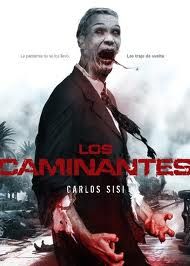
Quizá la primera parte es la más dura de leer para aquellos que no estamos demasiado acostumbrados a navegar por el “género zombi”, pero rápidamente nos acabaremos situando con las desgracias, angustias y terror que nos provocan estos seres. Aunque no debemos de esperar menos agresividad de este título, porque la portada de éste ya nos indica que no todo nos darán un respiro de tranquilidad.

Cómo primera parte de la trilogía de “Los Caminantes”, esta novela cumple con todas las expectativas de aquellos que nos lancemos a su lectura. Hace poco que se volvió a sacar este exitoso libro en formato digital y en inglés para los lectores interesados de esta nueva oleada de literatura zombi castellana.

 ————————————————————————————————

The epidemic didn’t took them, it brought them back

TECHNICAL CARD:

Author: Carlos Sisí

Published: December 2009

Publisher: Dolmen

Genre: Terror, Zombie

CRITIQUE:

When we think in the “zombie” genre we always remember the fabulous movies of George A. Romero, the mythical videogame “Resident Evil” (Forget some of the Spin Off and the fourth and fifth game) or the successful TV Series “The Walking Dead”, where the zombies harass and make danger to our protagonist’s lives. However, if we take a look in the scenery of the “crime”, it will always happen in places like the EUA, England or Tokyo.

So, this book will let us in scenery that is known by many of us: Spain. Like “Apocalipsis Z” had done two years ago, “Los caminantes” let us in a Spanish territory destroyed by the zombie epidemic. It doesn’t mind (by the moment) why or when the zombies get the world control, but we will know what had happened with some initial resistance to the epidemic.

Beginning with this premise, the book will take on the role of Juan Aranda, Isabel, Moses, “El cojo” and the others characters, each one more charming than the last. All of them will be wrapped in terror and violence spiral capable to become crazy to the sanest, especially if we are in the city where we have lived much of our life and we have to confront with our familiars, friends and known in zombification state.

And in the middle of all this “Chaos” we will find with a God’s devoted figure: the Isidro Priest. This character will be the Nemesis of the human from Málaga because Isidro thinks that he has a Mission (Judge the wicked with the Army of God) with his Gift: Walk between the zombies with arouses any interest in him. Here will begin the truly horror of the survivors when this priest will begin to hunt them with an undead army.

The Characterization of the characters and their relationship are tribal in the course of the novel. Sisí has done special emphasis in the physical and psychological description of the survivors of the pandemic without differentiate the protagonists of the characters that are going to die just around the corner This “attitude” let us get into a higher tension than in others books of the same genre, because there only the main character survives and is only him who is perfectly described. In this book everyone can die.

The plot is so elaborate like the psychological depth of the survivors around the story.  There isn’t only elaborated with some twists marked by the horror and the chaos of the events, but it has the ability to hook who has beginning to read the book, like some sticky TV series but with a Hollywood movie plot. We can’t ever know how the book will end (before finishing it), the huge twists and the changes of the space and temporal situation will get us quickly at the fantastic ending that is waiting us in the lasts pages.

Maybe the first part of the book is the more hard to read for everyone who is not habituated to navigate in the “Zombie genre”, but we will situate quickly with the disgraces, anxieties and terror that those things will induce us. Although we should not expect less aggressiveness of this title, for the cover of this already tells us that not everything will give us a peaceful break.

As a first part of the “Caminantes” trilogy, this novel satisfies with all the expectations of those who launch at reading it. Recently this book has been released for e-books and it has a perfectly English translation for the readers interested in this new round of Spanish zombie literature.

Entrada Original en:

 http://www.carlospuech.com.es/2012/09/los-caminantes-carlos-sisi.html

EL FIN DE UNA LEYENDA: LANCE AMSTRONG PODRÍA PERDER TODOS SUS TÍTULOS

Estándar


Como comentó una compañera de “carlospuech.com.es” este mismo agosto: los planes antidopaje cada vez están siendo más efectivos y duros con los deportistas que  han consumido sustancias ilegales. Esta vez, nos hemos encontrado en el punto de mira de la Agencia de Antidopaje de los Estados Unidos (USADA) al “Tejano”, al “Big Tex”, a Lance Amstrong.

El legendario ciclista anunció el 24 de Agosto que dejaría de recurrir a las acusaciones de dopaje por parte de la USADA. Éste organismo llevaba una década intentando acusar a Amstrong de dopaje, pero no había conseguido dejar nada claro hasta ahora pese a los múltiples análisis y las declaraciones de los compañeros de equipo de Lance. Amstrong hace referencia a la gran “cacería” que ha sufrido al triunfar en el ciclismo después de superar un cáncer de testículo.
Quizá su éxito posterior fue provocado por los medicamentos que tuvo que tomar Amstrong para no fallecer, o quizá sus siete victorias consecutivas en el Tour de Francia fueron realmente una muestra del esfuerzo y motivación que emprendió el tejano en 1999 y finalizó en 2005.
Puede que su gloria fuera una mezcla de ambos factores, pero de lo que tenemos que estar seguros es que la USADA ha conseguido que toda esa “fama” pase a “vergüenza”, porque Amstrong puede perder todos los títulos que había conseguido abarcar desde 1998, entre ellos cabe destacar los siete Tours de Francia y una medalla de bronce de Sídney 2000 tal y como pasó con Floyd Landis, ganador del Tour del 2006 sancionado al dar positivo en testosterona y no sería hasta 2007 que Oscar Pereiro pudiera vestir el maillot amarillo.
Travis Tygart, director de la USADA afirma que se le aplicará en breves una sanción de por vida y retirarán todos los títulos que Amstrong ha obtenido desde 1998, por lo que podrá conservar la medalla de oro conseguida en Oslo 1993. Tygart apoya la decisión de Amstrong porque la USADA tenía “suficientes pruebas” para incriminarlo, además de añadir que nunca habrían insistido tanto en un caso si no tuviesen la certeza de que estaban en el buen camino.
Buen camino o no, lo que la USADA ha conseguido es derrocar a un deportista de élite con sus pruebas o con sus catorce años de acusaciones y de persecuciones. Los que quedaron segundos en el Tour de Francia entre 1998-2005 pueden estar contentos de haber ganado esta competición tan mitificada, aunque en estos casos siempre queda pensar que los hilos se han estado moviendo para favorecer los intereses de algunos ciclistas.
Y estos últimos pensamientos no sólo lo pensamos unos pocos, sino que profesionales como Oscar Pereiro hace referencia que las acusaciones de los compañeros de equipo de Amstrong lo hicieron para no ser sancionados tan duramente. Y para finalizar, en sus últimas declaraciones el corredor español afirma que el manager de Alberto Contador y ganador del Tour de 1996 admitió doparse (Bjarne Riis) y la USADA no realizó nada para retirarle la victoria.
Hoy, 24 de agosto de 2012, se cierra la investigación de antidopaje más importante y, por desgracia, puede finalizar también la carrera profesional del ciclista más aclamado de los últimos tiempos.

The end of a legend: Lance Amstrong could lose all his major wins

As a colleague of “carlospuech.com.es” said this August:  the anti-doping organizations are more effective and tougher than ever with the sportsmen who take illegal substances.  This time, we have the “Texan,” the “Big Tex,” better known as Lance Armstrong, in the spotlight of the U.S. Anti-Doping Agency (USADA).
The legendary cyclist announced on August 24th, 2012 that he would not fight the accusations of doping by the USADA. This organization has tried for a decade to accuse Armstrong of doping, despite the blood analysis and the declarations of his team partners. Armstrong complains about the witch-hunt he endured to succeed in pro cycling after Testicular Cancer.
Perhaps all his later triumphs were a consequence of the drugs Armstrong had taken not to die, or maybe his seven victories in “Le Tour de France” were really a result of the efforts undertaken by the Texan between 1998 to 2005. 
His glory may be a result of the two factors, but what is certain is that USADA has turned all this “fame” to “shame” because Armstrong has just lost all his “Major Wins” since 1998, including seven France Tours and the Bronze medal he won in Sydney 2000. It is the same situation as with the winner of the “Tour de France” in 2006, when Floyd Landis got positive in a testosterone test. Until 2007, Oscar Pereiro could not wear the yellow jersey. 
Travis Tygart, chief executive of the USADA says they will apply a life ban and will retire all the titles that Armstrong won since 1998, but he can keep his Gold Medal from Oslo 1993. Tygart supports Armstrong’s decision because the USADA had “enough proof” to incriminate him, adding that they would never have insisted so much in a case if they weren´t certain they were on the right track. 
Right or wrong, the USADA has brought down an elite sportsman with their tests or with their fourteen years of accusations and persecution. The seconds on all the Tours de France between ’98 and ’05 can be happy in the knowledge they have won this prestigious competition, but in those cases there will always be a suspicion that strings were pulled to favour certain cyclists’ interests.
We are not the only ones who think like that, even professionals like Oscar Pereiro says that the accusations from the Armstrong’s team partner were made to avoid being sanctioned. Finally, in his last declaration, the Spanish cyclist says that the Alberto’s Contador Manager and winner of the ’96 Tour (Bjarne Riis) admitted he had been doped, but the USADA did nothing to take away his victory.
One of the most important Anti-doping investigations has finished and unfortunately, the professional career of the most acclaimed cyclist of all times could also be finished.
Entrada original: